The Death of the Screen: Welcome to the Era of "Zero-UI" Technology
We spend our lives staring at glowing glass rectangles, but the most exciting trend in technology is making the screen disappear entirely. Step into the fascinating world of "Zero-UI" (Zero User Interface), where ambient computing, voice, gestures, and predictive AI take over. Discover how this invisible tech is shifting from sci-fi to reality, and how Isaii Technologies is engineering the intelligent systems that power this seamless future.
By Isaii Team · Related to Isaii Leads — WhatsApp CRM & Automation
Obsession with the Rectangle
If you are one of those tech enthusiasts who are always on the lookout for new tech developments—digital "window shoppers"—then you may find that there is little room left for innovation when it comes to hardware. Our phones become thinner every year, our screens become a little bit brighter, our bezels become slimmer by just a millimeter or two. But what has not changed in a decade is the fundamental way we interact with technology: we tap and scroll on a piece of glass.
It is a high-friction process where we have to pull ourselves out of the real world to look at our gadgets. But that is not what the true future of technology is about—building a better screen. The true future of technology is about getting rid of the screen altogether.
And welcome to the Zero-UI age.
What is Zero-UI?
Zero-UI (Zero User Interface) is a paradigm of design which posits that the best UI is no UI. It is a shift from active computing (when you have to actively command your device via its screen or keyboard) to ambient computing (when technology surrounds you and responds to you naturally).
As against the conventional way of making humans learn the language of machines, Zero-UI makes the machines learn the language of humans.
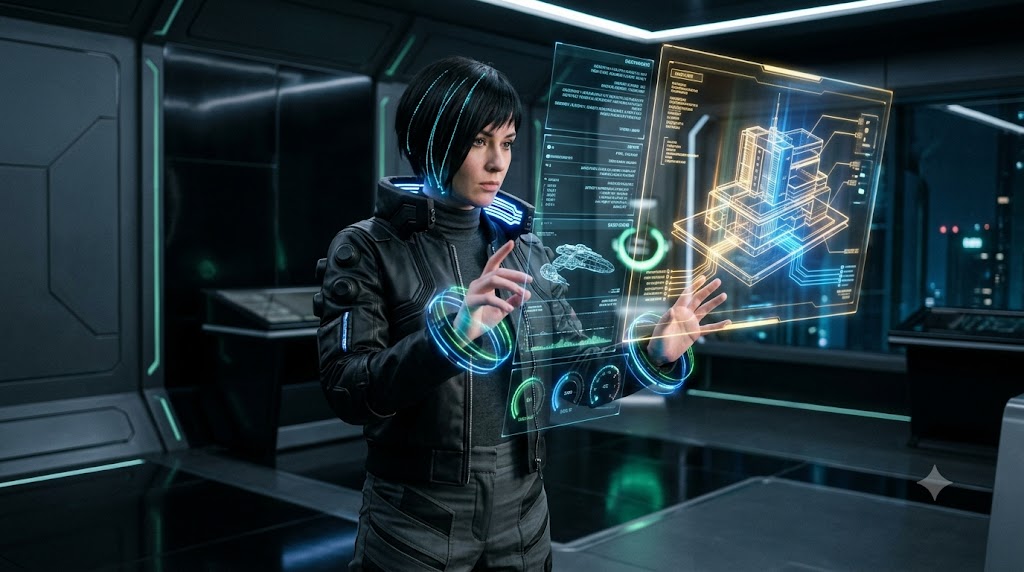
Haptics and Gestures: Imagine changing the volume of the music by turning an imaginary dial in mid-air, or ignoring an incoming phone call with a wave of the hand. Spatial gesture control through the use of micro-radar technology (such as Project Soli by Google) has already made this possible.
Conversational AI: The days when you had to communicate with robotic and rigid voice assistants are gone. With the help of LLMs, you don't have to say something like, "Turn the lights in my living room into 50% mode." Just say "It's a little dark around here" and your environment will adapt to it.
Computer Vision: No longer cameras that record what you do, but ones which understand what you do. Such a concept has been introduced by Amazon Go where you enter the shop, take your things and leave without having to go to the checkout counter.

Ultimate Interface: Predictive Intelligence
The best case scenario for Zero-UI is that the interface doesn't even need a gesture or voice command. It just knows what you want.
At a consumer level, it is the smart home locking the doors, turning off lights, and lowering the thermostat as soon as you drive off from the driveway through geofencing.
However, the real value of predictive intelligence lies in the enterprise domain.
Zero-UI in the Enterprise Domain: The End of Data Entry
While consumer experience suffers from 'app fatigue', the enterprise suffers from 'software exhaustion'. In the conventional corporate setup, the employee serves as a human interface. The process includes reading an email, opening the CRM, filling up the details into a form, saving it, and assigning the task through another piece of software.
What would Zero-UI look like in the context of businesses? Active Workflow Intelligence.
Consider a sales manager working for a rapidly growing organization. An important client reaches out through WhatsApp and requests a quote for a large order. In the case of Zero-UI, there would be no need for the manager to manually log this activity.
The intelligent agent working in the background will understand the natural language of the WhatsApp message and automatically check the current live inventory of the company, compute an offer depending on the client's behavior and previous activities, create a quote, and update the sales pipeline. The only "interface" the human manager sees is one notification that says, "Quote created based on your client's WhatsApp request. Approve sending?"
It is the transition from tools to teammates.
How Isaii Technologies is Shaping the Invisible Future
For all you tech geeks who can’t help but window shop for the future, it’s easy to get lost in the shiny new consumer gadgets. But the real disruption – the one that is creating huge amounts of economic value – is happening in the architecture of enterprise systems.
You can’t expect a Zero-UI experience on the user side if your back end looks like spaghetti code in Excel and old legacy servers. To make technology invisible, the underlying data architecture has to be perfect.
That is precisely what Isaii Technologies engineers.
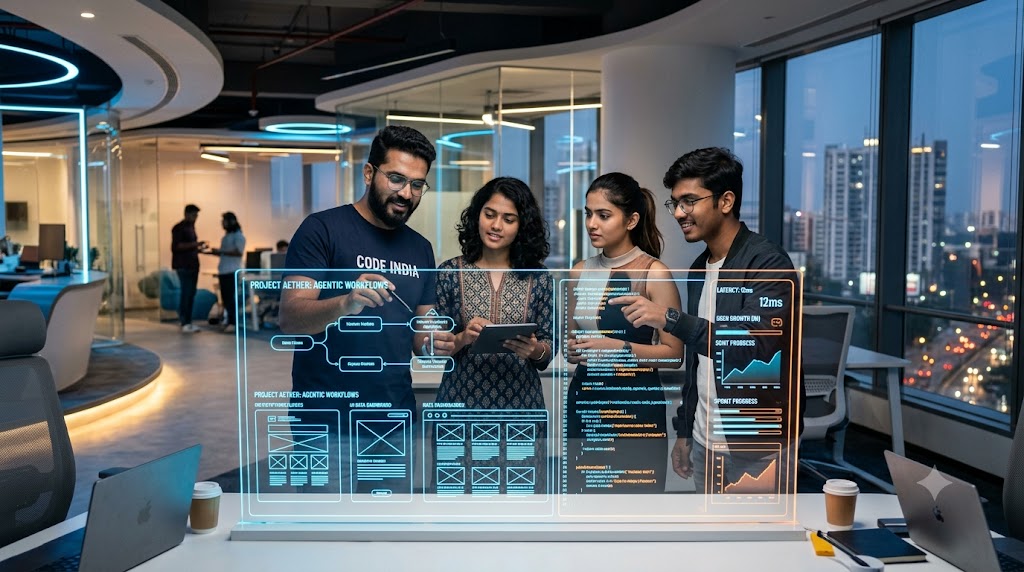
By engineering cohesive and unified ecosystems such as the GRAM Integrated Business Management System and native connections of communication channels through Isaii Leads, we engineer the perfect data architecture necessary for automation. We engineer the intelligent infrastructure that makes companies in Coimbatore and throughout the world able to manage their growth instead of their screens.
If your software is perfect for your company, it will become invisible.
Stop shopping for the future and start shaping it. Are you intrigued by the transformation of technology from being just a tool into being an ambient intelligence? Then find out how we do
Next step
Interested in working together?
Tell us about your product or idea — we'd love to hear from you.
Continue reading